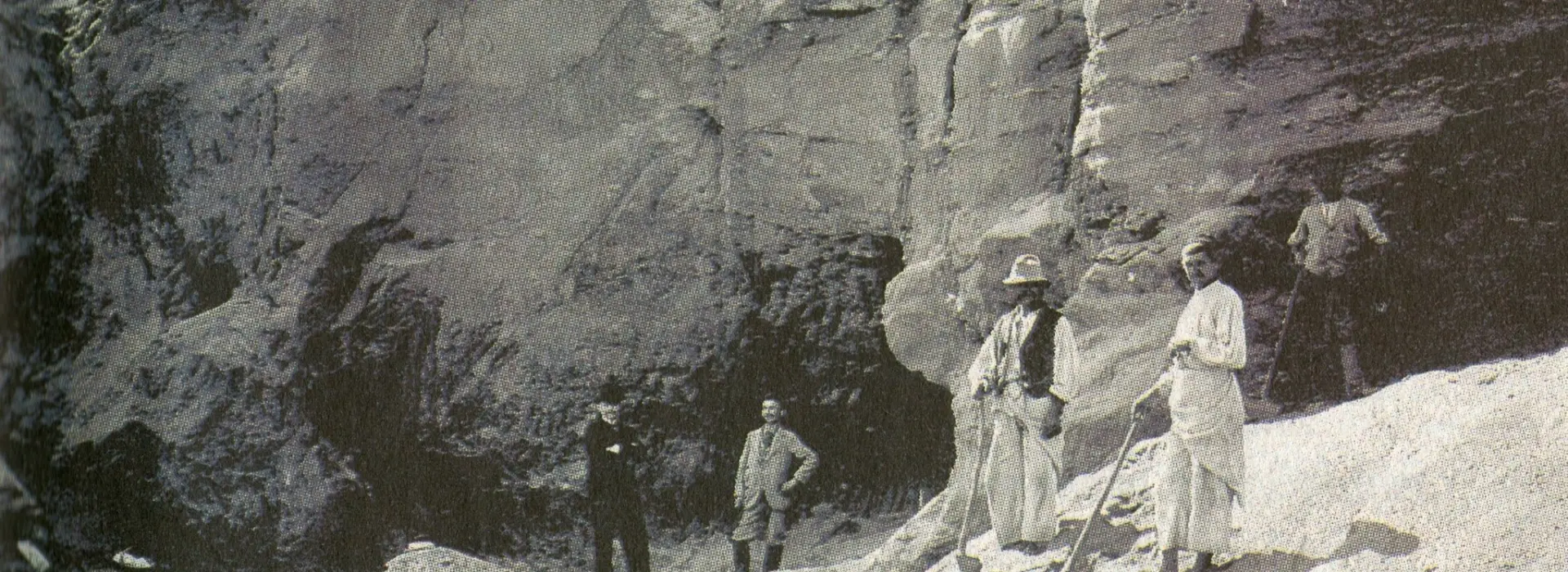


124th anniversary of the discovery of the Krapina Neanderthal
Just like today, it was a hot and humid Wednesday 124 years ago, on August 23, 1899, when Dragutin Gorjanović-Kramberger, director of the Geological and Paleontological Department of the National Museum and professor of paleontology and geology at the University of Zagreb, arrived in Krapina by steam locomotive from Zagreb.
He arrived at the invitation of the people of Krapina who had been finding unusual bones in Hušnjakovo for some time, with the idea of collecting the remains of “diluvial mammals” or Pleistocene animals in Krapina. However, upon arriving at Hušnjakovo, from a certain distance from the open cave, Gorjanović noticed streaks of ash, burnt sand and charcoal in the sandstone rock. Of course, these were traces of a hearth, and the fact that a creature that knew how to light a fire resided in that small cave was confirmed to Gorjanović by a human molar tooth that he also discovered that day. What a find! Gorjanović immediately realized that he was standing in front of an ancient human settlement!
Research and excavations, which began soon after, lasted until 1905, and during that time numerous fossil bones of Neanderthals and animals such as cave bears, warm-age rhinoceroses, bison and giant deer were found. In addition to about 900 bones belonging to Neanderthals of different sexes and ages, about 1,200 artifacts, Neanderthal stone tools, were also found, and the Krapina collection is the largest collection of Neanderthal man found in one place. In addition to Dragutin Gorjanović-Kramberger, the collection of fossil remains from Hušnjakovo was also investigated by numerous other, world-renowned scientists, discovering numerous information and interesting facts about the life of Stone Age hunters and gatherers who lived in Krapina about 125,000 years ago.
For more information, visit the Krapina Neanderthal Museum!
Photo gallery


